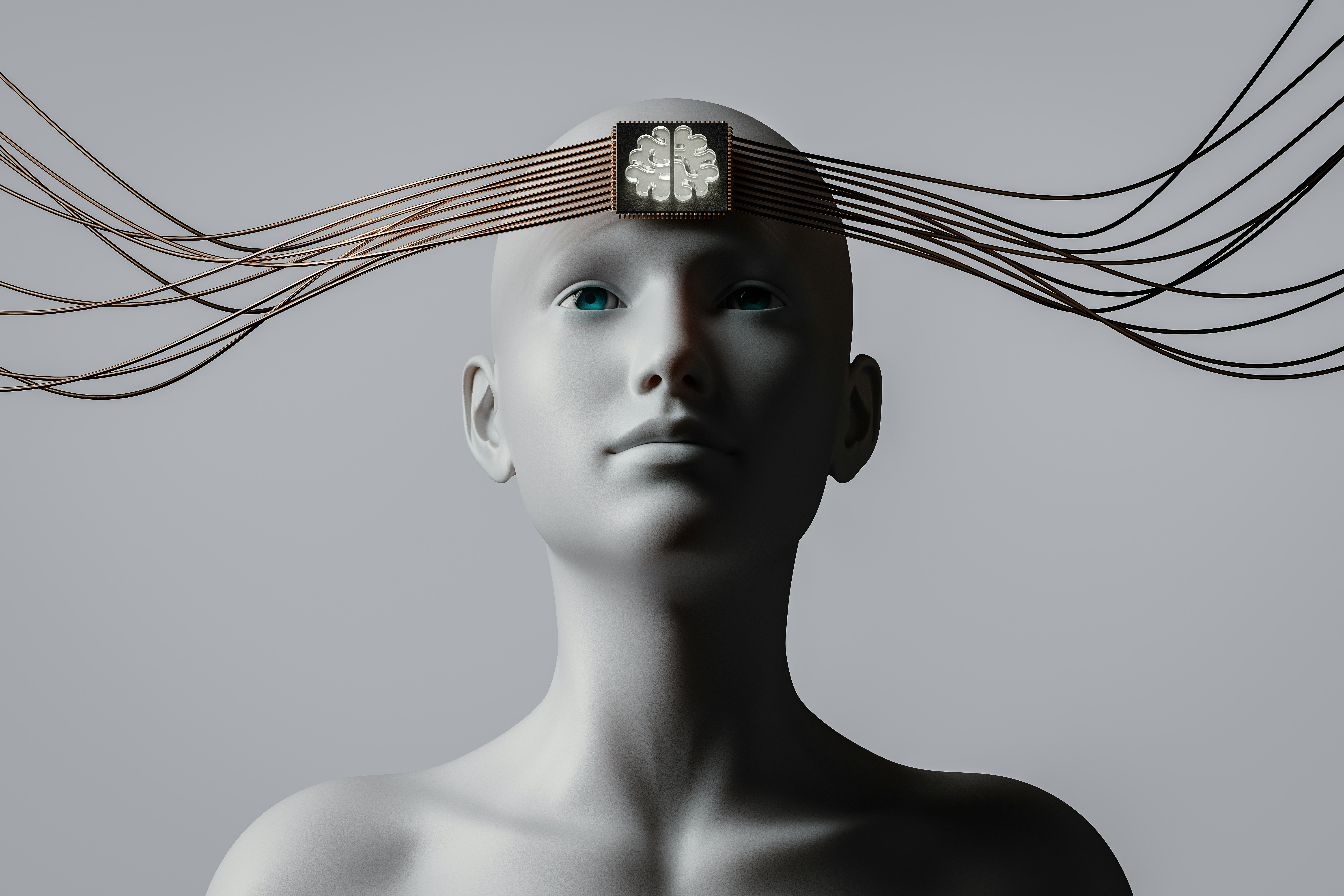
alex-shuper-IOusOQundeI-unsplash.jpg1.94 MBElon Musk’s Neuralink technology sits in a weird place. On one hand, brain-computer interfaces (BCIs) are not new, and the industry has decades of “promising demo” history with painfully slow clinical adoption. On the other, Neuralink is clearly doing real engineering: high-channel-count neural implants, robotics-assisted insertion, custom silicon, and a full software pipeline aimed at turning noisy biology into usable cursor control.
So is it sci-fi? Not really. Is it solved? Not remotely. The honest framing is this: Neuralink’s brain chip architecture contains meaningful innovations in neural data acquisition and neural implant design, but the hardest layer is scaling those breakthroughs safely, reliably, and repeatably in humans.
The BCI Problem Is Not “Can We Read Brain Signals?”
A modern invasive BCI is basically a full-stack system:
BCIs have historically struggled because every layer is fragile. A lab demo can tolerate lots of calibration time, expert babysitting, and frequent adjustments. A real medical device can’t. That’s why the most interesting question isn’t “can it move a cursor?” It’s “can it do that for years, across many patients, with predictable outcomes?”
Neuralink’s clinical study materials describe their system as three integrated components: the N1 Implant, the R1 Robot, and the N1 User App (software). That matters because Neuralink isn’t selling an electrode array; they’re selling a deployment architecture.
1) Implantable Neural Electrodes: Flexible Threads And High Channel Count
Neuralink’s N1 Implant is described as recording neural activity through 1,024 electrodes distributed across 64 threads, with threads “thinner than a human hair.”
Why threads? Flexibility is a bet against the body’s long-term reaction to foreign objects. Stiff arrays can cause greater micromotion (the brain moving slightly relative to the implant), potentially increasing inflammation and scar tissue over time.
2) Custom ASIC: Analog Front End, Digitization, And Early Processing
Neural signals are tiny. You need low-noise amplification, filtering, and digitization close to the source to avoid a collapse in your signal-to-noise ratio. Neuralink described a scalable, high-bandwidth platform in its 2019 paper, including custom electronics designed to handle many channels efficiently.
This is one of the underappreciated “real engineering” parts: building an implantable system that can reliably acquire many channels without cooking tissue, draining batteries, or dropping packets.
3) On-Chip Spike Detection Vs Streaming Raw Data
A practical neural implant can’t necessarily stream everything at full fidelity all the time. You end up trading off:
Raw data streaming: better for research, heavier bandwidth/power
On-implant feature extraction (spike detection): lighter data, more assumptions
This is not just an optimization problem. It shapes what future algorithms are even possible, because you can’t decode what you didn’t record.
Wireless is where hype meets physics. Your neural implant is limited by:
Power budget (heat is the enemy; tissue safety is non-negotiable)
Bandwidth (more channels means more data)
Latency and reliability (cursor control feels terrible with jitter)
A high-channel implant is impressive, but the real question is whether it stays stable and safe while pushing enough signal through the pipe to be useful.
5) The Surgical Robot Is Part Of The Brain Chip Architecture
Neuralink’s PRIME study brochure explicitly positions the R1 Robot as the mechanism used to place the neural implant threads in the brain. This is the manufacturing line for biology.
Robotics matters because scaling invasive BCIs requires consistent placement with minimal trauma. If outcomes depend on a handful of elite surgeons doing artisanal procedures, you don’t have a product, you have a boutique experiment.
Signal Processing Is Where Biology Fights Back
Even with great electrodes, the data is messy:
Electrode impedance changes over time
Tissue response can dampen signals
Micro-movements change which neurons you “see”
Noise sources are everywhere (muscle activity, environmental interference)
This is why “spike detection algorithms” and preprocessing are survival tools rather than just academic. And it’s also why older systems like Utah arrays worked for research but struggled with long-term, broad deployment: the signal doesn’t just degrade gracefully. It can shift, drop out, or become unstable.
Biocompatibility: The Slow Failure Mode That Breaks Roadmaps
If you want a single category that historically kills invasive implants, it’s the long-term relationship between tissue and hardware.
Flexible polymer threads may reduce damage compared to rigid structures, but no neural implant is immune to foreign body response. Scar tissue, inflammation, and microvascular damage are the long game. You can’t brute-force this with “more data” or “better software.” It’s materials science, surgical technique, and time.
That’s the uncomfortable part for timeline predictions: many failure modes only appear after months or years, and you can’t speedrun biology.
The Software Pipeline: Data → Decoding → UX (And Why Drift Is Inevitable)
A usable BCI is basically an ML system embedded inside a medical device:
Model drift is not a bug; it’s a property of the system. Signals evolve, and decoders must adapt without becoming unstable.
Neuralink’s PRIME study framing focuses on enabling people with paralysis to control external devices via an implant + app. That’s a sensible near-term target because it’s measurable: accuracy, speed, fatigue, daily usability.
What Neuralink Has Actually Proven So Far (And What It Hasn’t)
Neuralink technology received FDA clearance for a first-in-human study in 2023. They began human trials in 2024, and reporting since then has described early users controlling cursors and digital interfaces.
Those are meaningful milestones, but they’re not the endgame. Early demonstrations tell you the stack can work. They don’t tell you:
How often it fails
How performance holds up over years
How consistent outcomes are across many patients
What the long-term explant/upgrade story looks like
That’s why “telepathic typing” makes a great headline but an incomplete engineering claim. Typing is not magic; it’s throughput, error rate, latency, and training time.
Near-Term Reality: Where This Could Genuinely Help Soon
If you’re trying to stay grounded, focus on applications with:
Neuralink’s own study materials frame paralysis and external device control as the core goal, which fits what the FDA is designed to evaluate: safety + initial effectiveness.
Long-Term Vision: Why Cognitive Enhancement Is A Different Universe
The leap from “cursor control” to “full cognitive enhancement” is not incremental. It’s a different scale of:
Channel count and brain coverage
Biocompatibility demands
Decoding complexity (thought isn’t a single variable)
Safety expectations (enhancement has a much higher bar)
If Neuralink technology becomes a mainstream medical BCI platform, that’s already a huge win. Enhancement talk is, at best, a far-future research direction.
Neuralink is serious engineering, not vaporware. The brain chip architecture shows an integrated approach: implant + robot + custom silicon + software pipeline.
But if you’re betting on “near-term reality,” bet on the boring stuff: controlled trials, incremental capability, and hard evidence across many patients. Timelines will be defined by biology, regulatory proof, and manufacturing consistency, not by how compelling the next demo looks.